
What are piston seals? 3 Commonly Asked Questions
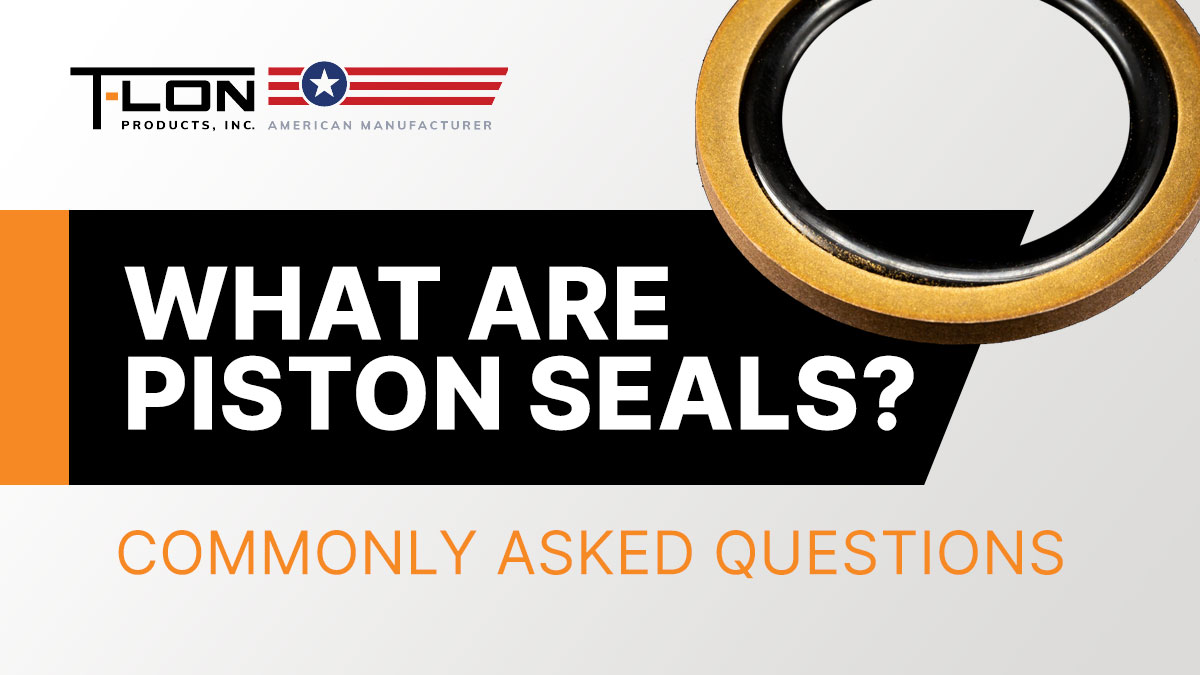
A piston seal is the work horse of the industrial world. Behind every powerful hydraulic press, smooth-moving excavator arm, and precisely controlled robotic system lies a small but indispensable component doing the heavy lifting quietly and consistently. Often overlooked, piston seals are the heroes that keep industrial systems running efficiently, safely, and reliably under pressure. Whether in automotive systems, heavy machinery, or advanced automation, these compact components play a vital role: pistons couldn’t function nearly so well without them.
In this guide, we’ll break down what piston seals are, why they matter, and where you’ll find them making a difference every day. We’ll end by walking you through the piston seals by T-LON and why they’re the industry’s best.
What are piston seals? 3 Commonly Asked Questions
What is a piston seal?
A piston seal is a critical component in hydraulic and pneumatic cylinders. It forms a seal between the piston and the inner wall of the cylinder bore, preventing fluid or gas from passing across the piston. This relationship allows the cylinder to generate the force and motion needed for mechanical work.
Piston seals, usually manufactured from polyurethane, rubber and PTFE, are designed to withstand high pressure and friction while maintaining a tight seal as the piston moves back and forth within the cylinder. They ensure efficiency, safety, and performance in a wide range of applications. Piston seals may be in a single or double-acting design, depending on whether the cylinder must seal in one direction or two.
Why is a piston seal important?
Piston seals ensure a tight seal between the piston and the cylinder bore. As the piston rod moves, it generates high pressure on the seal, increasing the contact force between the seal and the cylinder surface. Therefore, the surface characteristics of these sealing areas are crucial for optimal seal performance. Here’s what makes piston seals essential:
Pressure Retention: They keep hydraulic or pneumatic pressure confined to one side of the piston, allowing for efficient force transmission.
Leak Prevention: They prevent internal leakage within the cylinder, improving system performance and reducing fluid loss.
Smooth Operation: They reduce friction and wear, ensuring smoother motion and longer service life of components.
System Efficiency: By maintaining a strong seal under pressure, piston seals help increase energy efficiency and reduce maintenance costs.
In summary, piston seals maintain pressure, prevent leaks, reduce friction, and improve the efficiency and durability of hydraulic and pneumatic systems by ensuring a tight seal between the piston and cylinder bore. Piston seals are a small but essential part of many mechanical systems. They keep systems running efficiently, prevent leaks, and support the safe and reliable movement of machinery across a wide range of industries.
What are common applications of piston seals?
You’ll find piston seals in many applications. For example, T-LON’s SPI series piston seal can be found in mobile hydraulic cylinders, pneumatic piston cylinders, agriculture equipment, hydraulic valves and pumps, filling machines and testing machinery. In automotive systems, you can find piston seals in brake systems, suspension components, and power steering systems. Piston seals can be found in hydraulic cylinder applications like industrial machinery, agricultural equipment, and construction machines such as excavators and bulldozers. In pneumatic cylinders, you’ll see piston seals in automation and robotics, in food and packaging systems, and in any material handling equipment.
T-LON’s Piston Seals
T-LON’s piston seals are long-lasting and increase efficiency while saving energy. They operate in extreme temperature fluctuations and are resistance to corrosive and chemical materials. Resilient in tough, harsh conditions, T-LON’s piston seals also insulate against conducting electricity.
T-LON offers a number of piston seals. For the full collection, view the T-LON catalog here. Learn more about a selection of T-LON’s seals: The TLQ series, the TOQ series and the TRPI series piston seals.
About the TLQ Series Piston Seal
The TLQ series piston seal is a hydraulic seal with a reliable low-leak seal for both low and high pressure systems. It has been tested in the field for over 30 years.
This seal is a double-acting filled T-LON® PTFE compound with a square elastomer energizer offering premium seal stability in reciprocating applications, along with an x-ring elastomer energizer on the OD to minimize leakage, which helps seal low molecular weight gases.
The filled PTFE seal ring is manufactured with an interference fit with the bore and optimum compression with the square and x-ring energizers. This means the seal offers excellent sealability at low pressures and high pressures when the cylinder experiences ballooning. The square energizer helps prevent the seal from rocking, something often experienced with a standard o-ring. See the full spec sheet on the TLQ series piston seal here.
About the TOQ Series Piston Seal
The TOQ hydraulic piston seal is a proven reliable “zero-leak” seal for both low and high pressure systems for applications that require holding loads for an extended period of time.
This seal is a double-acting filled T-LON® PTFE compound with an o-ring elastomer energizer designed for reciprocating applications. Just like with the TLQ series, the TOQ’s filled PTFE seal ring is manufactured with an interference fit with the bore and optimum compression with the o-ring and x-ring energizers. This again offers excellent sealability at low pressures and high pressure when the cylinder experiences ballooning. See the full spec sheet on the TOQ series piston seal here.
About the TRPI Series Rotary Piston Seal
The TRPI rotary piston seal is another reliable seal for both low and high pressure systems. It is a double-acting filled T-LON® PTFE compound with an o-ring elastomer energizer, offering premium sealability in slow rotating or oscillating applications. The filled PTFE seal ring is manufactured with an interference fit with the bore and optimum compression with the o-ring energizer, again offering excellent sealability at low pressures and high pressures when the cylinder experiences ballooning. See the full spec sheet on the TRPI series rotary piston seal here.
About T-LON
Family-owned and operated for 45 years, serving all five continents, T-Lon has combined a progressive customer-centered approach with a no-nonsense financially-sound philosophy to achieve consistent growth and steady customer satisfaction.
This philosophy has allowed T-Lon to position itself for the long-term and continue its tradition of service, quality, and pricing. If you’re looking for reliable, high-performance piston seals for your equipment, get in touch with us today to learn more about our sealing solutions.